This is where the Legions of Kadmon mythos diverged from Gothic Horror. Fragment of the Great Evil—or simply Emet—is a magical relic putting emphasis on the Fantastical aspect of the world. At first glance, the Fragment may look like a generic spell book. But how exactly does a generic spell book become a Sovereign in Legions of Kadmon?
Root
I am obsessed with magic systems. Maybe it was because of my mechanical engineering background. Or maybe it was because I am a huge Sanderson fan. I wanted a definition of a magic system that could govern Morbidia. Back then, I oversimplified the mythos. There is a Great Evil and it is the source of this dark, necromantic magic. He is so powerful that a fragment of his soul is enough to claim a Sovereign spot. Therein after, the Fragment of the Great Evil is born.
Character Inspirations
The One Ring (Lord of the Rings)
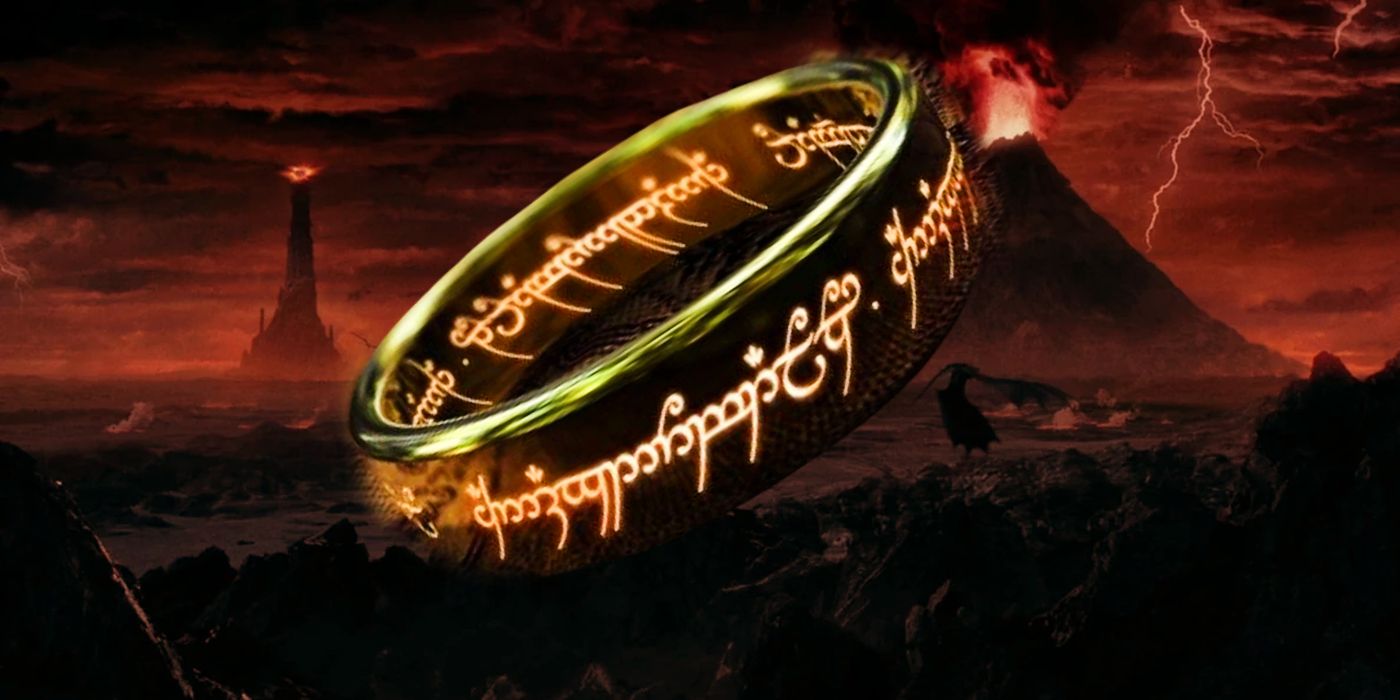
As you are reading the Root section of this log, you might have thought, hey that sounds familiar. As I expanded on the relic’s origins and story, I too realised it sounded a lot like the One Ring. So, I doubled down and leaned further on the idea of the One Ring. What if the relic carried its own conscience and could influence how its carrier thinks? What if the relic’s mission is to return to its owner? I realised how fun that concept is.
As for the shape, of course I couldn’t make it another ring. There are a lot of considerations that came into deciding on how the Fragment would look like. In the beginning, I wanted it to be a broken sword. Then I realised a broken sword might be too ostentatious. So I made it a gem, or stones. And I realised… that’s too boring.
How did I end up with a book? Believe it or not, the decision came a little later as I wrote the novel. The decision came when I figured out who Kadmon really is. Kadmon and the Fragment are two characters very tied to each other. To decide what the Fragment would look like, is determining who Kadmon is. And because Kadmon is a reader and a storyteller, what better form is there than a book?
Gameplay Design & History
I’ve mentioned, many times, that Legions of Kadmon is inspired by Magic the Gathering. One of the most popular (and notorious) mechanics introduced by Magic is counterspells. As a blue player, I realised how powerful and also annoying counterspells are. I want to have counterspells in the game, but I understand that I cannot have too many of them. I tried designing the ability as a Basic Unit’s spell, but I realised that it’s too much. So I relegated it to a Sovereign Spell. One time use, incredibly powerful defensive Spell.
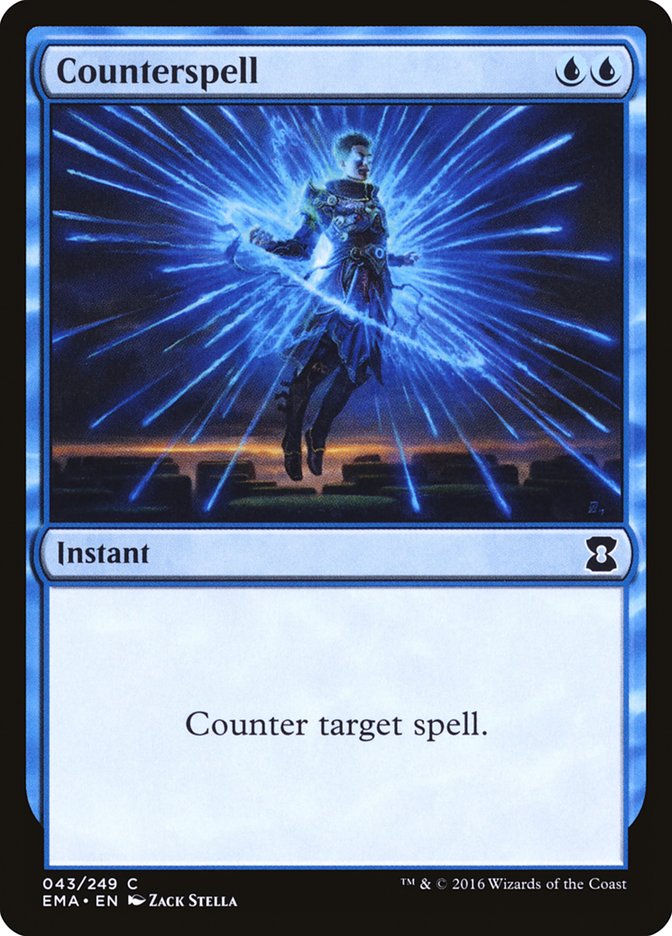
There are challenges when it comes to designing the unit form of the Fragment. It was very difficult to make a counterspell into a unit without making it too powerful. The Fragment has always been the problem unit for me, and only just recently, I managed to find a good fine line to represent him as a card. So here, I’m going to share this journey of finding the Fragment.
The Power of the Dead


Among many comments I’ve received from public demos, the most vocal ones are comments on how difficult it was to activate the Unit Type Bonus. I intended it to be difficult. But I think the challenge was: given the availability of such a mechanic, many believed that it was a core mechanic easily attainable. So the idea of not obtaining a single bonus in the game didn’t feel so good.
If there is one Sovereign that could fix this issue, it would be the Fragment. Thematically, it makes sense because it’d want the player to use the power of the Dead. So I spent some time attempting to alleviate this concern and integrate it as the book’s Legion effects.
In the beginning, I must admit, I used the laziest mechanic I can think of to obtain this. Players can now summon 2 units. Easy. Already, you see the result. But that brought me another problem. Players now have too much resource in a single turn, being able to summon 2 units, cast a spell and invoke an already existing Sovereign. That brought me to yet another lazy mechanic that leaned into the Fragment’s identity as a counterspell.
Counterspell as a Unit
Well. Players now cannot cast Spells as long as the Fragment is a Ruling Sovereign. Disaster happens. I removed the player’s ability to interact with another player, and that resulted in the stronger player getting stronger. Everytime I played the book, it resulted in the stronger player to snowball because of the Unit Type Bonus and the other players had no means to deal with it. Removing a player’s ability to play spells just ruins the entire dynamics of the game.
This issue was actually very bad that I had to bench the Fragment from play during demos because I know it will ruin everyone’s experience. One or two sessions was quite telling of that. Well good thing is, without all these demos and playtesting, I wouldn’t be able to come up with a new and improved Fragment. So that’s all thanks to everyone who plays Legions of Kadmon in TCQ, BGG.CON and ABGFs.
Resurrection

One of the most underused mechanics in the game is resurrect, coming only from a few Undead cards whose identity is to sustain your board. I realised then how important this is alongside the use of Invocation. Everyone can perform three actions, for which the Fragment, as a Ruling Sovereign, gives players the ability to resurrect a unit type of their choice.
I completely remove the idea of inhibiting players to use Spells. The effects of counterspelling now apply partially, such that only the Legion is protected, but players can still wage wars with each other. Furthermore, the resource distribution is now levelled. If a player owned a Sovereign Vassal, they can choose to activate that Vassal’s Invocation or Resurrect instead. So it’s a decision a player has to make. Which is more advantageous for them?
These abilities allow players to attain Unit Type Bonus more consistently as long as the Fragment becomes the Ruling Sovereign. But it also allows players to prevent each other from attaining it so as to avoid letting a player go out of hand.
Illustrating the Fragment
Andrea Corsini once again worked with me on creating the Fragment. I’ve mentioned it in previous posts about how amazing she was when it comes to concepting and bringing ideas to life. Due to the more intricate nature and the lore implications that the Fragment illustration brings, Andrea suits best.
The concept she brought on the Fragment was in line with the design she had previously on the vitars and even Kadmon’s design. As a matter of fact, it was these very designs that led the team to design a much better looking card design and back. The Fragment’s design plays a huge role in setting the theme of the entire game.
If you pay close attention to the illustration, there are two important components in the piece. Bronze traceries and black rocks. There are a lot of story implications in those two components, which I really hope you can discover when you have the chance to read my book.
The character in this piece is also illustrated within the black trails coming out of the surface of the book instead of the book itself. It represents the conscience I’ve talked about in this log.


Leave a Reply