Quickstart Guide
Thanks for playing Legions of Kadmon! The following will help you get into the game session quickly!
Set Up
Player Assets

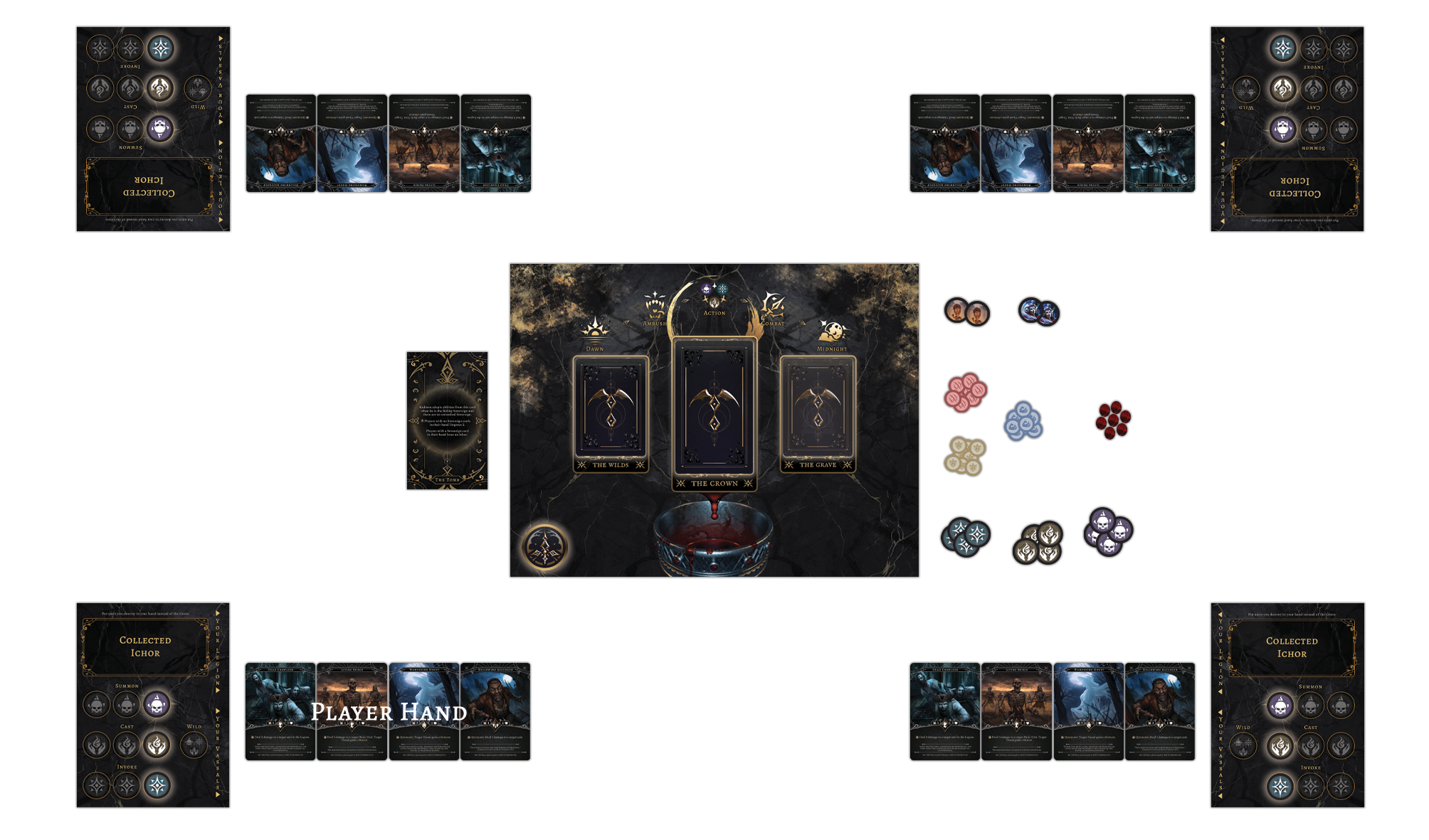
- Give each player a Player Mat and a Summon, Cast and Invoke Action Tokens. Place them on each slot on the Player Mat with their ‘Charged State’ facing up.
- Give each player a set of Starting Hand Cards (Silver-Bordered Cards)
The Centrepiece
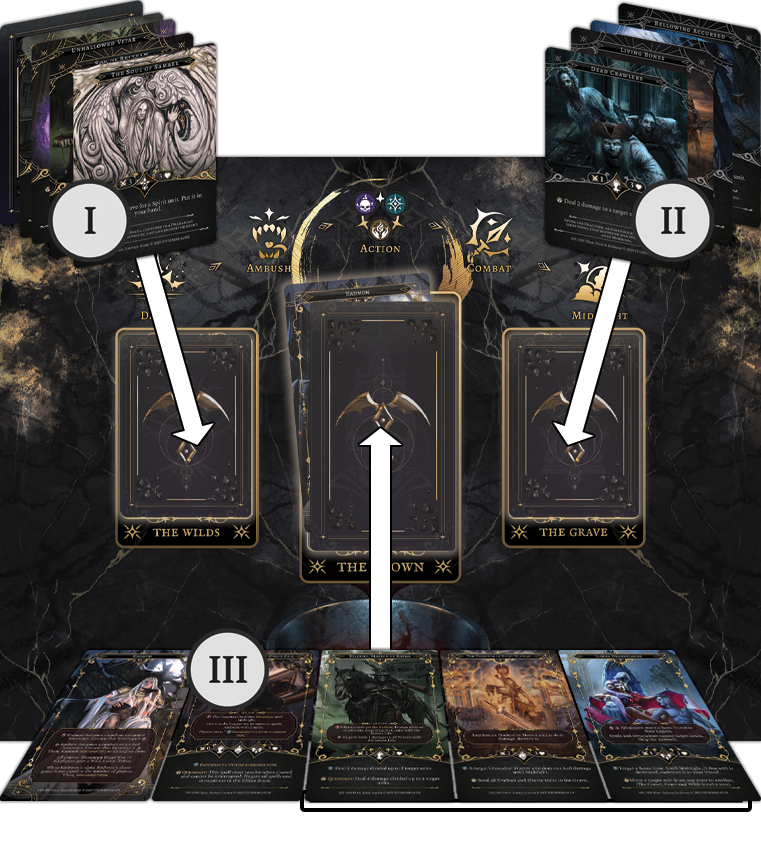
- Shuffle & Set the remaining Basic Unit Cards face-down. This becomes the Wilds.
- Set remaining Hand Cards on the Grave face-down. This is the starting Grave.
- Have a total of 5 Sovereigns in the Crown. Kadmon, Fragment of the Great Evil and 3 other Sovereigns of your choice. Put this pile face-down and Kadmon must be at the bottom of the pile.
Magna Cycle: Ambush Phase
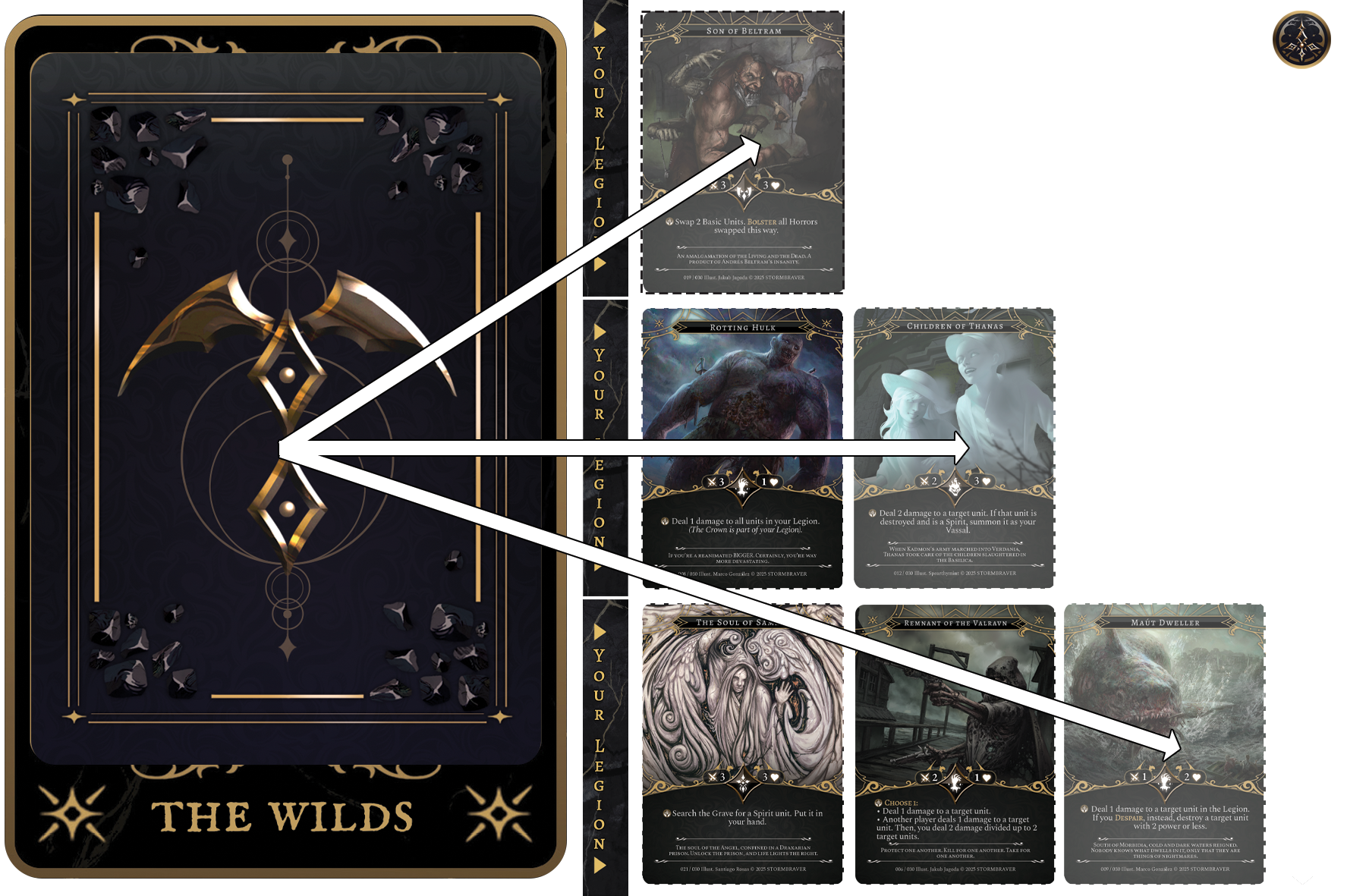
The Ambush Phase is the spawning of threats to each Player’s Zones. Starting from player with Kadmon’s Sigil, a Normal Unit will be revealed from the top of the Wilds and Summoned into a Player’s Legion. A player must defeat these units in order to deal damage to the Ruling Sovereign and obtain Ichor (Victory Points). There are many way a Player can achieve this, and all of them are done through the Action Phase.
Magna Cycle: Action Phase
During the Action Phase, a player can perform one of each of these actions:
- Summoning (Action Word: Summon)
- Spell-Casting (Action Word: Cast)
- Invoking (Action Word: Invoke)
Players will resolve their Action one by one, beginning with the player with Kadmon’s Sigil.
Summoning

To Summon, a player puts one card from their hand into their Vassal Zone. Once the card enters the Vassal Zone, they are considered a unit and is referred to as a Player’s Vassal. A summoned unit will deal and endure damage during Combat (next phase).
Spell-Casting

To Cast, a player puts one card from their hand into the Effect Stack, declaring themselves to be casting a Spell. A Spell in the Effect Stack will resolve unless interrupted by another Spell. When a Spell resolves, the Casting player executes the effect written in text beside the Spell Icon and the cards involved will be sent to the Grave.
Invoking
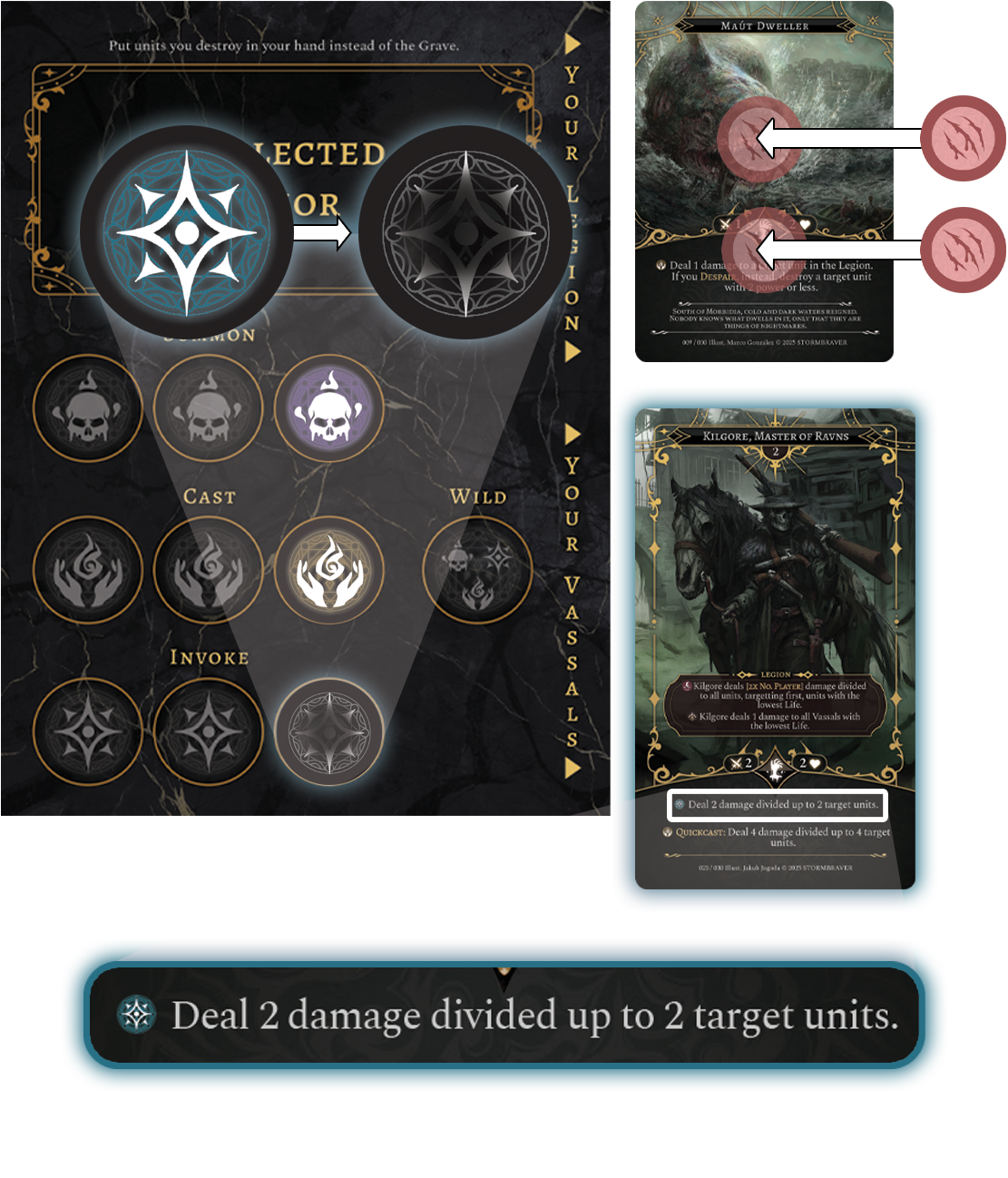
Invocations come in more rarely. They are abilities that can be found in Sovereigns or Unit Type Bonuses. So, the Quickstart Guide will not go through Invocations yet. Please see the Rulebook for more details.
Magna Cycle: Combat Phase
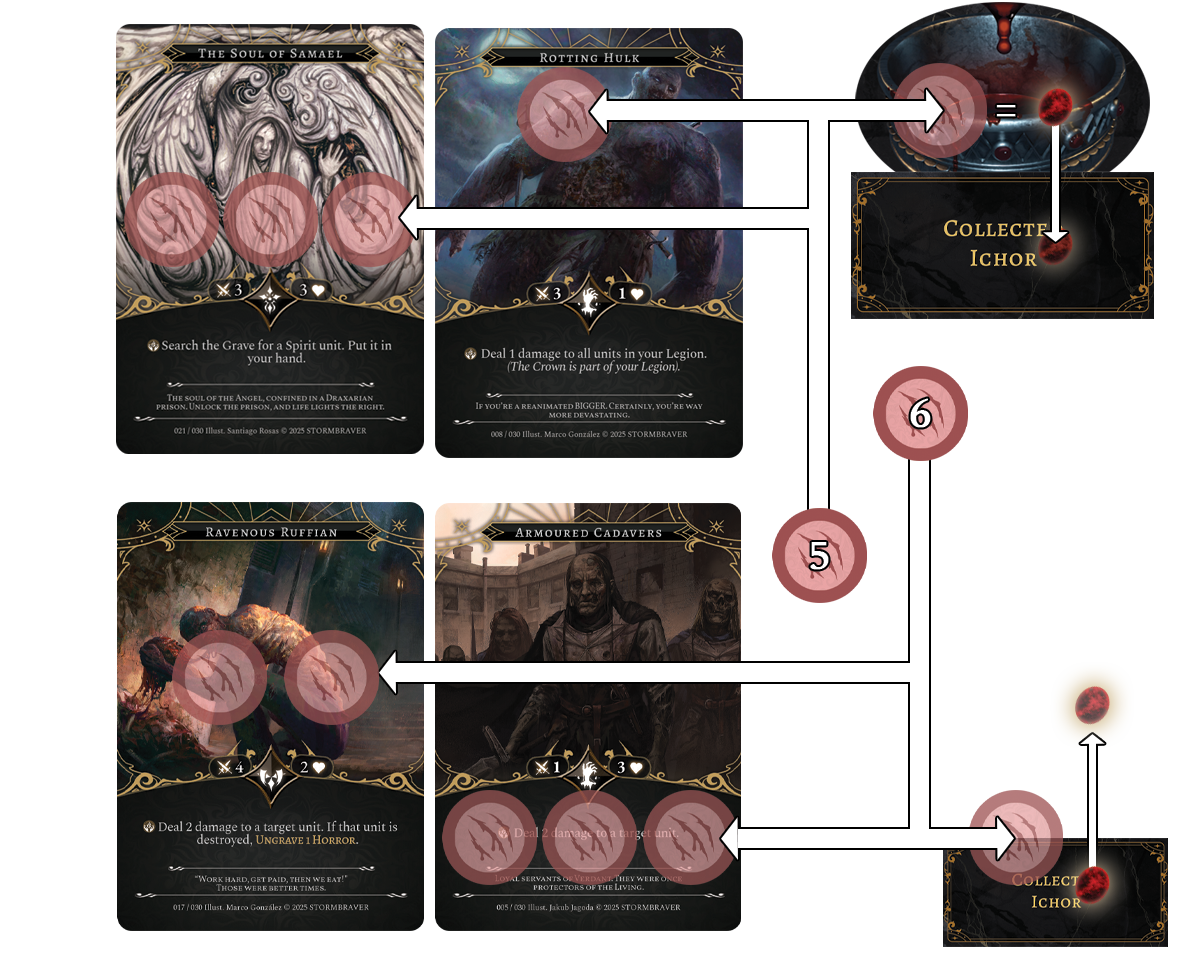
This phase can get a little confusing and it will involve a little bit of Math! During this Phase, the units in each Player’s Zones will ‘fight’ each other. The Player’s Vassal will deal damage to that Player’s Legion and vice versa. Players will have the liberty to assign combat damage however they please. Units does not deal damage to individual units, rather, the entire Combat Phase can be re-imagined as a huge brawl. Damage to be distributed to each faction is represented by the total Power the opposing faction has.
Dealing Damage and Destroying Units

Damage can be dealt through Combat, Spells and Invocations. When a Unit is dealt damage, a Damage Counter is added on it. When the Damage Counter exceeds the amount of Life that Unit has, it will be destroyed. In Legions of Kadmon, when a Player destroys a Unit, it does not go into the Graveyard. That Player instead put those Units in their hand.
Units destroyed by the Legion will go to the Graveyard.
Magna Cycle: Midnight Phase
After Combat, Midnight Phase begins. During this Phase, Players will check for 3 things:
- Player’s Death – Happens when a Player has no unit in their Vassal Zone.
- Maximum Hand Size – Discards to 4 cards.
- Shield Counters – Remove any Shield Counters.
Player’s Death
During the Player’s Death. That Player loses 1 Ichor, Ungrave (Draw from the Graveyard) to Maximum Hand and units in that Player’s Legion escapes back into the Wilds.
The First Dawn – Sovereigns Come Into Play

After Midnight, a new Dawn begins. This is when the game gets intensified. On the First Dawn of the game, the first Sovereign is flipped from the top of the Crown. The face-up Sovereign on the Crown is referred to as the Active Sovereign.
Active Sovereign will impose rules on how Players are to play the Game. This rule is unique to each Sovereigns, so make sure you read the card properly. An Active Sovereign usually have a Calamity that is to be triggered when it is first revealed. It also have a number that denotes the amount of Kadmon’s Ichor it carries with them. Collecting Kadmon’s Ichor is the primary goal of the game.
Kadmon’s Ichor and Winning the Game
When a Player deals damage to the Active Sovereign, that Player collects Kadmon’s Ichor from it according to the damage that Player had dealt. Combat Damage can only be dealt to the Active Sovereign only if all damage have been assigned to that Player’s Legion. When an Active Sovereign runs out of Kadmon’s Ichor, it is destroyed. The Player that dealt the final blow put that Sovereign to their hand (just like any other Units). Then, a new Sovereign is revealed by flipping the next card on top of the Crown. This process repeats until Kadmon is defeated. The winner of the game is the Player that collected the most Ichor throughout the game.
It is, of course, possible to lose Ichor. Ichor can be lost when Player’s Death occurs, or if a Player’s Legion is dealing excess damage to that Player’s Vassal. The excess damage will deduct the amount of Ichor that Player already holds. The amount of Ichor that a Player holds cannot drop below 0.