The cruel and lovely princess of Verdania. Ianira is very dear to me. Looking at Ianira’s character is very much like looking at my growth as a writer. For you see, she is a character that evolved the most throughout the course of developing Legions of Kadmon and writing A Crown for the Promised. Because of that, she will always have a place in my heart.
(And no. It is most certainly not because the princess had completely seduced me.)
Root
When I decided that the theme of the game would revolve around three unit types—Undead, Spirit and Horror—I knew that I needed to have a succubus represented in the Horror category. It was a MUST HAVE. I remembered being admonished for this, the idea being called an absurdity. I personally thought it was funny and appealing. It was quite a common trope, and I thought that players would understand her gimmick fairly easily.
Character Inspirations
An Concept: Your First Heart Break
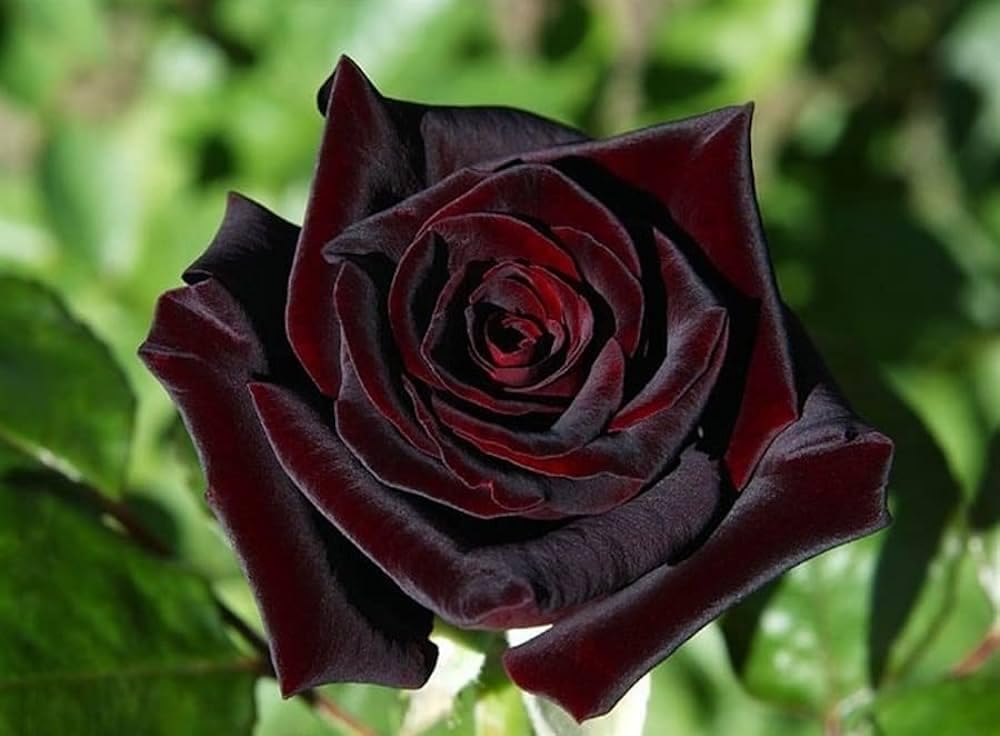
Unlike my other characters, Ianira was not exactly inspired by another character specifically. Rather, I was quite obsessed with the idea of first love. How painful it was to undergo your first heartbreak. I’m sure many of us have experienced it sometime in our lives. And for those who had experienced it, I’m sure that it made you question the meaning of love.
Intrigued, I asked myself a question: what if there’s a character who would abuse love this way? Whose purpose is to ruin people’s lives and careers. A character who would abuse love to attain power for themselves. I packed this into a core idea for exploration. From it, Ianira was born.
Ravenna (Snow White & the Huntsman)

There are many evil queens recorded in fiction. But when it comes to designing my own evil monarch, the face of Ravenna from Snow White & the Huntsman popped in my head. I am referring specifically to THAT iteration of the Evil Queen from Snow White mythos. Not the animation. Not the original fairy tale. But Ravenna from the movie, portrayed by the stunning Charlize Theron.
Something about Ravenna’s demeanour oozed the portrayal of power, corrupted and twisted in the most evil way. If you’ve watched the movie, you will notice how well Ravenna masked her evil at the beginning. She charmed the king, and the whole kingdom fell to their knees before her. Everytime she showed up in a scene, she commanded attention from the audience. And she did so with an unmatched elegance. Can’t help but bend my knee myself.
Ah… or maybe… It’s just Charlize Theron.
(And no. It is most certainly not because Ravenna had completely seduced me.)
Story Inspirations
As I’ve mentioned in the prelude, Ianira evolved throughout my process of writing. The primary reason for that was because I used real life people’s experiences with first love as a story inspiration. With so many stories culminating together, and the non-fantastical nature of these stories, it took me some time to figure out how to blend it in the entire Kadmon saga.
I’ve known early on what Ianira was supposed to represent. The challenge was figuring out how an individual could become such a character. Also, what kind of internal conflict could such a character have? That became the fun part of developing Ianira’s story. What kind of childhood she had that she felt love had betrayed her? Would the thought of loving come back to someone that despised love so much? If so, how could it happen? Who could restore it? And how could she change in the process? For the better or for worse? There were just so many questions asked when I wrote Ianira. Some of these questions were answered. Most of these questions remained a mystery, and I wish I could find the answer to that as I write and live more.
The conflict created by the concept of love can get very complex. It can also tell the most powerful of stories.
“And, as is true of any other strong and addicting drug, true first love is dangerous.” ~ Stephen King, Wizard and Glass.
Gameplay Design & History
All players move a Basic Vassal to their Legion.
‘Move’ and ‘Swap’ are important mechanics that I wanted to explore. Disruption (changing of board state without lethality) is a very important concept in a game filled with tabletop politics. There are a lot of ways to do it (Michael’s Invocation). But for a game that involves up to eight zones, ‘moving’ and ‘swapping’ is a mechanic that could stand out among the rest.
That brought me to the concept of ‘mind control’. A common trope in Trading Card Games. There is a card that adopts this mechanic, and it is a card that I remember very fondly:

Vassal Effects

Target a Basic Unit. Until Midnight, if that unit is destroyed, summon it as your Vassal.

Move a target unit from one zone to another. (The Crown, Grave and Wilds is not a zone.)
The design principle of Ianira is the phrase: “what’s yours is mine. What’s mine is mine.”. A very evil premise. The challenge of making this principle work is therefore to gauge the player’s reaction to the effect. Stripped to its core, Ianira has a veritable unfairness tied to her mechanic. Played as a Spell, Ianira can give a player 2 Action advantage (she strips another Player off a Summon and acts as a Summon action by itself). The scariest part of Ianira’s Spell is how versatile it is. There are so many ways you can use it, making it more dangerous in the hands of someone more experienced with the game.

Ianira’s Invocation is harder to design. For a long time, her design revolved around making her as an idol / totem, whereby she could generate value every time a Player does something. There was a time where her ability heals Vassals you control after Combat, but many told me that it was a low impact ability and it was an ability that was not fitting of Ianira’s character.
The second version of her Vassal Effect turned her into a Guardian Project whereby she became some kind of a deck-building engine. This effect garnered a better reception from the players, but it was still untrue to Ianira’s character. Also, I was not fond of making her an engine piece, because Legions of Kadmon is not designed as an engine-building game.
The stark contrast between her Vassal Effect and Spell made the previous design of her Vassal Effect obsolete. Players tend to play her more as a Spell than summoning her. When asked why, many said that playing her as a Spell is just way more fun.
Took me some time to re-evaluate her Invocation. For a long time, I was stuck. And whenever I’m stuck, I browse the MTG catalog, looking for inspiration. And I found one! Yet again, another card from the old Innistrad block: Olivia Voldaren.

The idea of tagging a unit and eventually controlling them was a fun concept to explore. I experimented with something similar. I tagged a unit, and if it would die anytime during the round, you can Summon that unit immediately for yourself. It was thematic and fun. It made Ianira interact with another player’s board which makes the player much keener to play her Invocation.
Ianira now has an Invocation which could potentially deny a player their card and give yourself an additional Summon. What I like the most about her Invocation is it is an ability that makes winning with Samael a possibility. Some may say even, the only card in the game that makes winning with Samael a possibility.
Legion Effects
Ianira’s Legion effects are much more straightforward. She has to be nasty to all players, stealing one of their Vassals to protect herself. It’s thematic and injects fear into the heart of players (which is what I want from a Ruling Sovereign). From the first iteration until now, Ianira’s core Legion Effect remains the same: all players put a Basic Vassal to their Legion Zone. The challenge was how to actually make this effect balanced.
When it comes to ‘unfairness’, Ianira suffered more complaints than Kilgore. Everytime Ianira appeared, it was almost a guaranteed death for all players. Players implored me to consider changing her ability to something else entirely, but I was quite insistent on keeping it. The cost of being insistent on something imperfect is the need to spend more time solving the problem it presents you. So, I hit the lab and experimented.
I realised after a while that I’ve looked at Ianira the wrong way. I was so focused on her impact in a single cycle that I failed to see the opportunity she offered in the following cycle. Because Ianira guarantees Player’s Death, the following Cycle often starts fresh. Back then, however, I kept the Ambush phase, which caused the players to face a net positive Legion. Skipping the Ambush, on the other hand, levelled the unfairness of Ianira and reversed the state of the board in a special way. Weak players get stronger because they have no Legion units to fight. Strong players get weaker because they have more Legion units to fight.
When I refined this, not only was I left with an ability that is ‘fair’, it also carries the feeling of ‘unfairness’ with it when the player first reads it. It makes her terrifying. Ianira also becomes one of the Sovereigns in the deck of seven that I always want to have in the Crown. Her Legion Effect offers so much comeback potential.
I love Ianira.
(And no. It is most certainly not because the princess had completely seduced me.)
Illustrating Ianira
Isabeau Backhaus helped me bring Ianira to life. Actually, working with Isa was a milestone for me because she is the first artist I’ve worked with who carries quite an accolade with her. Frankly, I was quite intimidated because I was fairly new with giving art direction. I learn a lot from working with Isa, especially the importance of understanding an artist’s workflow and structure my description better.
I, personally, believe that Isa’s colour choices are the main highlight of this piece. Putting Ianira’s reddish dress in a blue-ish environment is impeccable work. It really made Ianira stand out even though there are essentially 3 characters in the illustration.
When it comes to Ianira’s illustration, I wanted to portray her power by having her sitting on her small throne. At the same time, you might realise that hers wasn’t exactly a grand throne like Kadmon’s. I hoped that it showed the pretentious nature of that throne. That it was the idea of a throne instead of an actual throne.
At the same time, I wanted to tell a story of how she would attain such power. In this illustration, Ianira is accompanied by two servants who had completely fallen under her charms. Both of them were entranced lustfully, showing how lust became the driving force of their servitude.


Leave a Reply